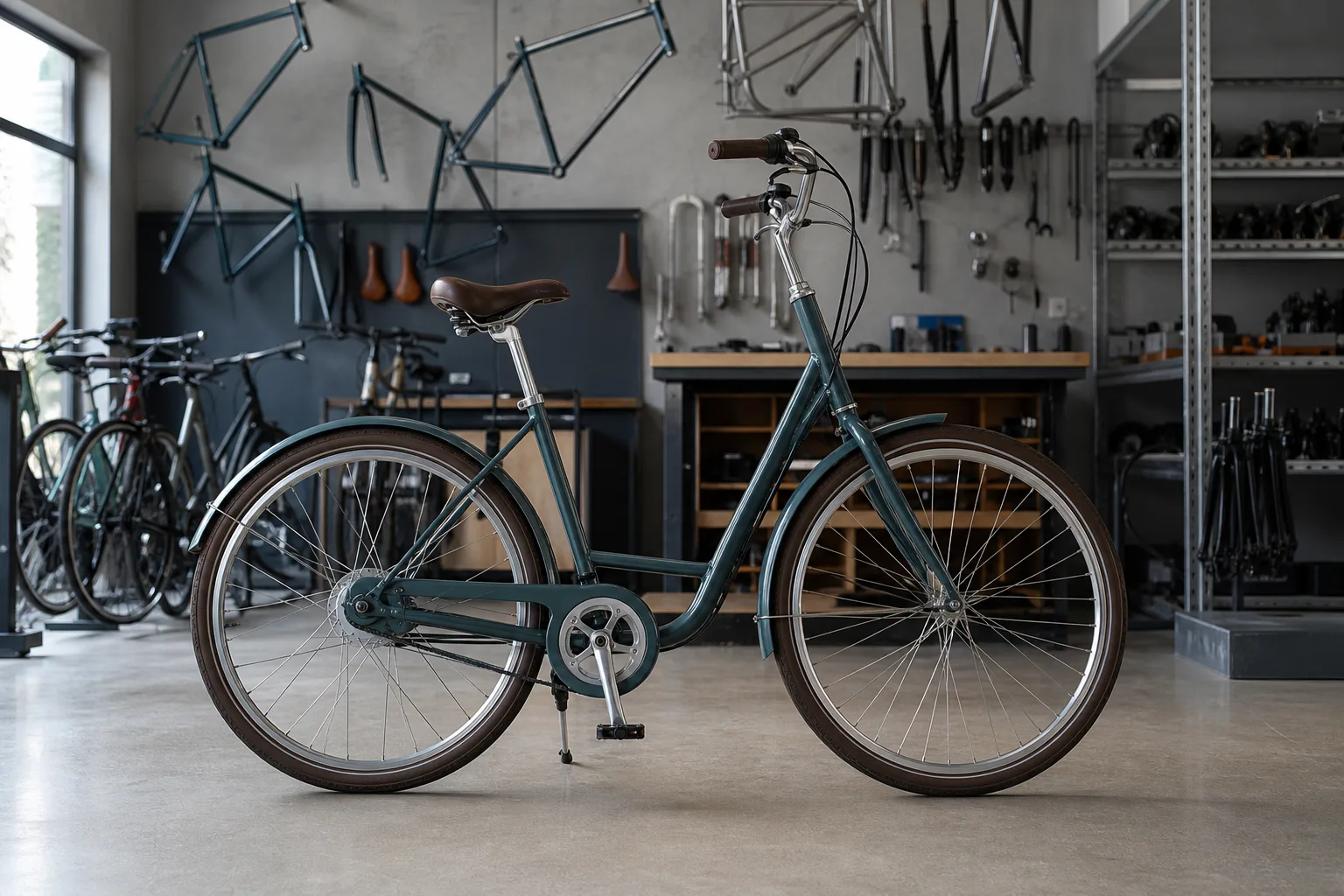
One rider's working-out of upright bicycles for easy, flat riding, put together after two bad purchases and a lot of measuring. Everything here can be checked against a bike in a shop or a garage.
Put a road bike and a cruiser side by side and measure one thing: the vertical distance from the top of the saddle to the top of the handlebar grips. On a road bike that number is usually negative, the bars sitting somewhere between two and five inches below the saddle. On an upright comfort bike it is positive, the grips level with the saddle or two to four inches above it. Nearly everything else people notice about how the two bikes feel follows from that single measurement and the changes it forces everywhere else on the frame.
Bar height moves your weight, not just your shoulders
Raising the bars rotates your torso back around your hips. As the torso comes up, weight slides off your hands and onto the saddle, and the proportion carried by each shifts substantially. A racer folded over the drops may be carrying a large share of body weight through the palms and shoulders; sit up and most of it lands on the sit bones instead. That transfer is the whole mechanism. It is produced by three things working together: a taller head tube, a stem with rise, and a swept-back handlebar that brings the grips several inches closer to the rider.
The saddle stops being a perch and becomes a seat
Once your weight sits on the saddle rather than being spread across three contact points, the saddle has to change shape to accept it. A narrow road saddle works because the rider is leaned forward and the pelvis is rotated, putting the load on the forward part of the sit bones. Sit upright and the pelvis rotates back, the sit bones spread wider apart, and a saddle 200 millimeters or more across becomes the sensible answer. Saddle angle changes with it. Level or a degree or two nose-down suits a forward lean; an upright rider often wants the nose level or slightly up, so the pelvis is cradled rather than sliding forward.
The seat tube angle helps here too. Upright frames commonly run a slacker seat tube, in the neighborhood of 68 to 72 degrees rather than 73 or 74, which puts the saddle further behind the bottom bracket. That is why the pedals feel like they are out in front of you rather than underneath, and why a foot-down stop is easy without dismounting. If you are comparing models in a category like Womens Comfort Bikes, that seat tube number and the saddle-to-grip height difference will tell you more about the ride than the frame material will.
What it fixes: hands, neck, and the view down the street
The three complaints that send people looking for an upright bike are almost always the same three, and the geometry addresses each one directly. Numb or aching hands come from body weight pressing the ulnar nerve at the outside of the palm; take the weight off and the numbness generally stops within a ride or two. Neck ache comes from holding the head up against a forty-degree torso lean for an hour; sit at seventy or eighty degrees and the neck does almost nothing. Visibility improves for a plain mechanical reason. Your eyes are eight to twelve inches higher, so you see over parked cars and drivers see you sooner.
There is a safety layer under all of this that most riders never think about. The Consumer Product Safety Commission is responsible for the federal requirements that new bicycles sold in the United States have to meet, covering things like braking, reflectors and protrusions, and those rules apply to a cruiser exactly as they do to a race bike. Upright geometry also puts more of your braking weight over the rear wheel, which makes the bike less likely to pitch forward but means the rear brake does more work and the stopping distance is longer than a leaned-forward rider is used to.
What it costs: hills, headwinds, and pedaling power
The bill comes due in three places, and it is worth being clear about the size of it. First, power. Leaning forward lets you brace against the bars and pull, recruiting glutes and hamstrings hard; sitting upright you are essentially pushing down against nothing but your own weight, so sustained output drops noticeably on any grade steeper than a highway overpass. Second, wind. Frontal area roughly doubles between a tucked road position and a fully upright one, and since drag rises with the square of speed, a fifteen mile per hour headwind that a road rider tolerates will simply stop an upright rider.
Third, standing. You cannot get out of the saddle usefully on a bike whose bars are behind and above you, because there is nothing to pull against and the pedals are too far forward to load with body weight. On genuinely flat ground, none of that matters. On a route with two or three short climbs, gearing solves most of it, and a wide-range seven or eight speed hub or derailleur with a low gear around 30 gear inches turns a walk-it hill into a slow ride. The trade is real, it is measurable, and on flat terrain the cost is close to zero.
Decide by your actual route
The honest way to choose is to look at where you will ride rather than what you like the look of. Ride a bike path along water, a neighborhood grid, a beach road: the upright position gives you comfort, visibility and easy stops, and takes almost nothing away. Ride a hilly town or a long open exposure where the wind comes off the plain, and every one of those costs shows up on the first mile. Most people already know which of the two describes their riding, and the measurement that settles the question is one they can take in a shop with a tape.