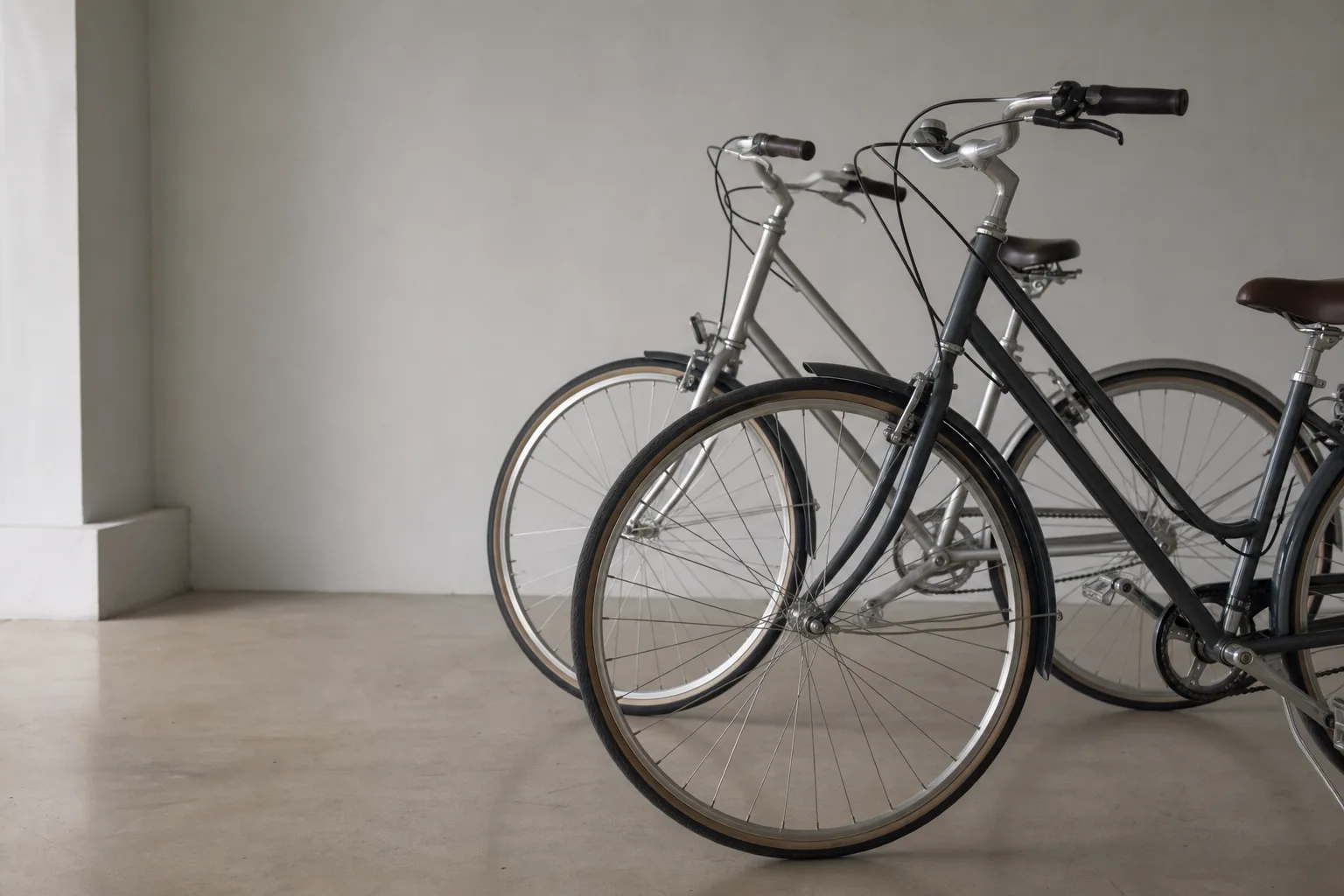
A frame with no top tube and a frame with a straight one can look, on a shop floor, like two versions of the same bicycle at the same price. They are not. The tube that is missing was doing work, and where the builder put that work instead is the whole question. On a flat five-mile ride with an empty rack the difference is close to invisible. Add twenty-five pounds of groceries behind the saddle, or a child seat, and it stops being invisible within one block.
Where the load goes when the top tube is gone
A diamond frame closes a triangle between the head tube, the seat tube and the bottom bracket, and that triangle is what keeps the front end pointed where the rear end is going. An open or step-through frame removes the top tube and has to make up the stiffness somewhere else: a fatter down tube, a doubled lower tube, a curved tube that runs from head tube to rear dropout, or simply more aluminum in the same shape. A mixte splits the difference, running a pair of thin lateral tubes from the head tube past the seat tube to the rear dropouts. That geometry gives a low step-over while still triangulating the front end, which is why mixtes have survived so long as a practical middle answer.
What a careful reader checks in the shop
Stand beside the bike and look at the down tube in profile. On a well-made open frame it is visibly larger than the down tube on the diamond model hanging next to it, sometimes ovalized or boxed, and that extra section is the honest sign that the designer accounted for the missing tube. Then hold the front brake and rock the bike forward and back while watching the head tube. A little movement is the headset; a lot is a headset that needs adjusting before you judge anything else. Finally, straddle the bike in shoes you would ride in and measure the gap from the top tube to your body, since standover is the one number the marketing photograph will never show you.
Racks, child seats and the numbers stamped on the hardware
Rack capacity is decided by three separate things, and a weak one governs. There are eyelets at the rear dropouts and on the seatstays, or there are not, and a rack clamped to a seatpost instead is usually rated for far less. There is the rack's own stamped or printed limit, often somewhere between twenty-five and about fifty-five pounds on aluminum touring racks. Then there is the child seat, which has its own weight ceiling and, in the frame-mounted style, needs a straight run of seat tube to clamp to that is not interrupted by a rear shock, a battery, or a bottle boss. The Consumer Product Safety Commission oversees bicycle requirements in the United States, and both racks and seats carry manufacturer instructions worth reading before the purchase rather than after.
Cruiser bars against flat bars, loaded
Swept-back cruiser bars pull your hands back toward your hips, which rotates the pelvis upright, shortens the reach, and puts a larger share of body weight on the saddle instead of the wrists. The cost is leverage. With the grips close to the steering axis you have less mechanical advantage over a heavily loaded front end, and a handlebar bag or a full front basket will feel wandery at low speed in a way it does not on a wider flat bar. Flat and lightly swept hybrid bars give up some of the wrist comfort and gain steadier steering when the bike is carrying something. Grip angle can be adjusted; sweep cannot.
How each behaves with the week's shopping on the back
Weight on a rear rack sits behind the rear axle and acts on a lever, so the frame's resistance to twisting is what keeps the back of the bike from swaying under a firm pedal stroke. A diamond frame with short chainstays feels tightest. A good open frame with a large-section down tube and a chainstay-mounted rack is close enough that most riders on flat pavement will not notice. A mixte, with its lateral tubes carrying straight into the dropouts, handles rear load unusually well for how easy it is to get onto. The frames that struggle are light open frames with thin tubes and a rack bolted only to the seatpost, and that combination is visible before you buy it.
The useful order is load first, then frame. Decide what the bike will actually carry, in pounds and in shape, then look for the tube sections, eyelets and rated hardware that match it, and let the step-over height be the tiebreaker between the two or three bikes that pass.